Showing posts with label Cumbria Volunteer Group. Show all posts

26 June 2015

Faffin around in Northern Ireland...

Working for the National Trust has many great benefits, one of the main being you are a part of a national organisation and you have colleagues in loads of interesting and beautiful places, including over in Northern Ireland (which can be easy to forget...sorry NI).  As such Rangers across the Trust have the opportunity (thanks to the generosity of the Mayled family, in memory of Andy Mayled), to link up with other Rangers allowing them to learn, discover and experience somewhere new.  So what greater contrast than the high fells of the Lakes to the hustle and bustle of Northern Ireland's capital Belfast!

From here.....
....to here!
This was the choice I (Upland Ranger Sarah!) made and over 3 days in June I swopped the 14 strong Ranger team in the South Lakes for the some what smaller 3 Ranger team in Belfast... 

The Belfast crew, the green helps them blend in...
Why Belfast I hear you ask?!  Well, I've done a wee bit of traveling, but hadn't yet made it to any part of Ireland, so when I heard about the Ranger link, heading over to Belfast seem a good way to kill two birds with one stone.  It also helped that I knew the Ranger, Craig, from the work I do as a rep with Prospect, the NT's union.  As such it wasn't long before we had dates in the diary, ferries booked and I was getting excited to be somewhere new and completely different.  Only as it turned out it was different...yet the same!

Same old fencing job, different location!
Let me explain.  You see, although the South Lakes has a 13 strong Ranger team, that team is broken down into more specialist teams and day to day I mainly work with the 3 other guys that make up the Upland team.  So rocking up to the Ranger office at Minnowburn and meeting Colin, Mick and Craig felt like a temporary exchange of the usual faces.  Accompanying them was a friendly bustle of volunteers, and lets not forget Bella!

The South Lakes massif
Over the 3 days I got to see some of the main bits of work the guys get up to in Belfast.  From working with school groups pond dipping and in the forest school, to practical work on one of their coastal sites in Port Muck, to the intricacy of project planning a car park development at Minnowburn where they can annually receive over 150,000 visitors.  It's what we as Rangers would expect to be involved in, it's just the balance of jobs or the habitats that may be slightly different. 

Irish language school group
Pond dipping


A very Ranger suitable totem pole, all about cake!
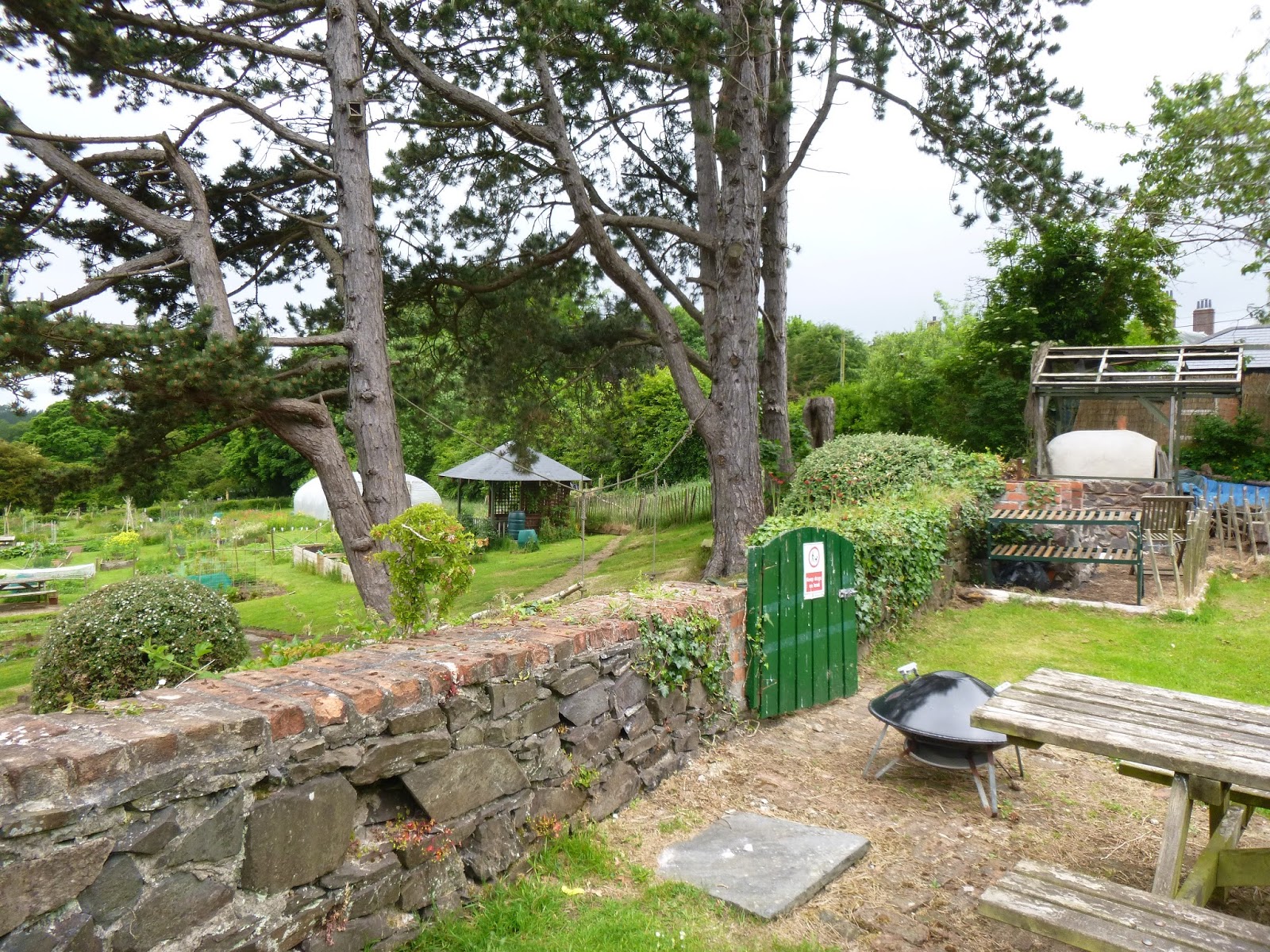
 For example in Belfast the large majority of their volunteer input is from large groups, whether those are corporate groups wanting to get out and do something different, or school groups looking to have a mix of education and conservation.  Partnership working is also key, Minnowburn itself is only 120 acres within the much larger Lagan Valley, covering 3500 acres in total and welcoming between 2-3million visitors a year.  Being on the doorstep to a population of over 300,000 people living in Belfast the opportunities to work with communities are well taken, a great example being the community garden that sits just behind the Ranger office and comes complete with a wood fired pizza oven for those long summer evenings!

Community garden, a great space

All in all it was a really interesting week that I would recommend to all Rangers.  It makes a refreshing change for both sides of the link and allows for plenty of learning, even if to start with you don't know how to articulate what that learning is!  For me though its back to the grind stone and back to home sweet home.

Home...literally- i can see my house!
By Upland Ranger Sarah
Follow us @ntlakesfells

6 September 2013

My shameful secret !


I’ve got an embarrassing and shameful secret, something I’ve been keeping from my friends and work colleagues. Something that a Countryside Ranger , of all people should be in control of. I think they suspect   ; there ‘s been strange looks in the corridor and conversations cut short as I walk into the room.
It’s something I thought I could deal with myself in private without outside help . I thought that was the best way , I thought I was strong enough.... I was wrong.

First it was just one then it was more than one and before I knew it , it was out of control. I don’t want you to think that I did nothing , I did try ... god knows I tried, I put hours in trying to stop it , last year I thought I’d got on top of it , I got cocky I suppose and that ‘s when it really took hold .

Well it’s time I faced my demons and came clean , so that you don’t  have to go through what I’ve been through , the skeleton in my cupboard, the shameful secret I’ve been trying to hide is   ......Himalayan balsam   it’s all over the bottom of the garden thousands of massive  plants with pink blousy flowers and then tens of thousands of seeds. There I’ve said it , and I feel much better now  that I’ve got it off my chest.


It’s a plant that is familiar in the British countryside introduced in 1839  by well meaning and curious Victorians they thought this exotic heavily perfumed pink flowering  plant  originally from the Himalayan mountains would look good in the garden . It did indeed look good in the garden but unfortunately it didn’t stay there ! This aggressively mobile plant has spring loaded seed cases that can fling the seed several metres and it thrives in almost any soil type . This means that it can ‘walk’ out of gardens  , along railway lines and down river banks where it grows in balsam stands,  tens of thousands strong out competing our native flora , by shading it out and taking its moisture.


For the last few years the National Trust ,  with hundreds of volunteers has been trying to eradicate this invasive species from our land in the Windermere catchment . We have been quite successful, I myself have lead volunteer groups pulling  balsam plants up by the roots . This makes my garden , one of the few remaining Himalayan balsam refuges on Trust land around Lake Windermere, something as I mentioned that is a bit embarrassing and not something I’m proud of . I have spent hours in the garden ,last year and this , pulling the plant up , but once the bracken has fallen over it forms a protective layer under which the balsam grows eventually poking its head up into the light to flower and seed . I am now involved in guerrilla warfare with it,  waiting for it to show itself and then pouncing on it and pulling it out or cutting the heads off it. It’s a battle that I think I am slowly winning now, I’ll find out for sure next year. 

Terminator vs. Mr Bean

If Himalayan balsam is  ‘ The Terminator’ of the plant world , an aggressive survivor that simply can not be stopped , then the touch- me- not balsam , our only native balsam  , is a bit more  ‘Mr Bean’.  It’s a nationally scarce plant found in the Lake District and North Wales, with an attractive yellow flower. The plant generally grows in small numbers in damp glades in woodlands and appears to be demanding in terms of light and moisture, it requires ground disturbance to spread. Balsam stands will grow and spread and then for no obvious reason ; disappear . We are lucky to have a good number of these balsam stands on our property in the south lakes  and now is a good time to find them in our woods . 


This unpredictable plant is also special because it plays host to a very scarce moth ,the caterpillars of the Netted Carpet moth, rely solely on this plant for their food . So the future of one is tied inextricably to the survival of the other. 


This is why at this time of year we are to be found on our hands and knees inspecting the underside of  leaves , looking for the small green caterpillars that will eventually become netted carpet moths. A job not made easier by the fact that the caterpillar is camouflaged and looks exactly like the seed pod and stem of the plant ! 


 As a result of some careful management  , grazing with cattle in some of our woods and  the spreading of seed , the number of plants  and moths are increasing . A significant success story for our native flora and fauna.

Paul Farrington
National Trust Ranger ( South Lakes )

19 November 2012

Our NT Cumbria Volunteer Group

This group is made up of a hardy and dedicated bunch covering all of the National Trust properties in Cumbria; no job is too big or too small. A good proportion of the team are based in the lakes but some travel from as far away as Cheshire and the Midlands, which emphasises the commitment and dedication to Conservation and National Trust.

The team hard at work clearing the site ready for laying.

The weekend saw the team working near Coniston on a hedge laying day. Hedge laying is one of everyone’s favourite tasks, It was a great day had by all with fantastic sunny weather for a change?!

Taking a step back to admire your handywork!
 After a well earned lunch and Birgit’s cake (not for the faint hearted!), the team finished off laying the hedge.

The finished hedge
Feeling inspired?
Coming soon to a property near you! If you’re feeling inspired or interested in the work they do or you just want to meet the team, they’ll be working at Ash Landing near the car ferry on the Western side of Windermere on the 2nd of December...let's hope the weather is as good again!


post & photos | Ranger Stuart