Showing posts with label National Trust. Show all posts

26 May 2016

Postcard from Clair in the USA

Hello! 

I'm sending a blog 'postcard' from the USA, about my recent adventures to the Grand Canyon Parashant National Monument and Lake Mead National Recreation Area (this is the first time they’ve offered shadow assignments at the World Ranger Congress). I’ve tried to pick out the highlights as there is so much I want to talk about!

Andy Dutton (an Australian ranger from Queensland Parks and Wildlife Service) and I spent a week with key staff and rangers at Lake Mead National Recreation Area, the Grand Canyon Parashant National Monument and Pipe Springs National Monument as well as the awe-inspiring Zion National Park. We shared stories about our respective areas and learnt about issues facing each of these areas. The American protected area system is so different to the UK, many of these areas are owned by the federal government. It was a fantastic experience to compare how the three different countries approach the ranger profession. And my, do the Americans know how to make people feel welcome.

Lake Mead is a huge area outside Las Vegas (think a huge version of Windermere) popular with boaters, day trippers and those seeking a wilderness experience.

The vastness of Lake Mead, where they're facing issues with historical lowering water levels.
We also experienced the Colorado river in all it’s glory by taking a rafting trip below the Hoover Dam to see some of their visitor and resource management issues. Obviously enjoying the mid-30 degrees heat!
 
Rafting down the Black Canyon, meeting local specialists including a meteorologist, the chief Law Enforcement ranger and a biologist.

Ranger pilot Scott Taylor also took us between Boulder City (where we were based) to St George in a small plane. In between bouts of nausea (the updrafts were pretty intense) I took what seemed to be a million photos of the Grand Canyon en route. The scale of land they manage out here makes having a small plane an essential part of their role, particularly for law enforcement and fire management.
What a view! 


As a contrast,we also saw the Grand Canyon from the Parashant (the flatter lands to the North of the main Grand Canyon that the tourists go to).


It was great to spend time with their ecologist, their physical scientist, archaeologist and other rangers and to learn more about what it takes to manage this huge piece of land.


And finally, imagine being a backcountry ranger and being given a government issued mountain bike to patrol around on? Often the roads in this part of the country are so difficult to navigate (particularly when it rains!) that this is the best way to get around (being a long distance runner also helps too, naturally). I am sure job applications from any of you fit and hardy souls would be welcome!


From one extreme to another. Zion National Park has 4 million visitors a year. Most going to the main canyon, with concrete pavements and double buses getting visitors up to the main walking routes up the valley. It seems in order for everyone to be able to enjoy these special places such apparent extreme measures are necessary.

One of the key things I’ve got from this experience is that as rangers we all face similar issues regardless of our location. However rangers in America have comparable powers to the police, have responsibility for fighting wilderness fires and play a key role in search and rescue. But then America is much much larger than the UK.

Many thanks to my hosts at both Lake Mead and the Parashant. I look forward to showing them the delights of our wonderful Lake District in the future!


I’ll leave you with this little guy…


Ground squirrel plotting something! 


I’m now at Estes Park in the Rocky Mountain National Park for the World Ranger Congress and it is quite a contrast to the very dry desert. 

Clair 


11 December 2015

A fond farewell to South Lakes


Every year when our annual cohort of full time, long term volunteers leaves, we make them (ask them to) write a blog reflecting on their experience. Well, this time it’s my turn to leave after a very happy couple of years working at South Lakes, and it seems only right that I should join in the tradition. It feels far too soon to be going, but when I look back at what we’ve been up to since January 2013, I’m amazed by the amount and variety of stuff we’ve managed to fit in!


I feel incredibly lucky to have worked in some of the most spectacular spots in the country…


…including hidden gems….


…on the most picturesque days.


I’ve built fences to make space for nature…


…and seen the results.


Experienced the madness of a film set…


…and the peculiar madness of Lake District wall gaps.


Not to mention that of spending too much time in the office.


And closest to my heart, I’ve met some great trees…


…and people.


So as the sun sets on my time at South Lakes, it's just left to say big love to the team, I’m gutted to be leaving x


7 October 2015

Fungi - eat or be eaten


Fungi eat or be eaten !

Having just got back from a Tree Safety Management training course and recently hosted a fungal foray guided walk , fungi are featuring prominently in my worklife at the moment . They are also behind some big challenges facing the National Trust  in the Lake District .

Autumn days of mellow fruitfulness

It is at this time of year that the Ranger team are out and about checking our trees for issues that might make them a risk to our visitors or property.  We deliberately choose this time of year because this is the time that many fungi are fruiting and are making themselves visible around the base or trunk of the tree. For some trees next to busy roads, paths  or houses , the presence of certain types of fungi can indicate a problem that might make the tree unsafe over time and because of this they may need some work doing to make them safe . This can mean the removal of a single branch , the removal of several branches to reduce the weight or height of a tree or in extreme cases,  and as a last resort,  the felling of the whole tree. We always try to do the minimum amount of work to a tree to make it safe.

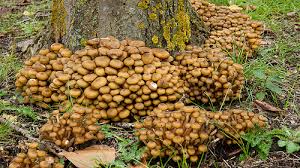
Honey Fungus at the base of a tree can be bad news .


Fungi are an essential part of the ecosystem, many of our plants and animals , including humans , are dependent on the success of  different forms of fungi for their survival . Many plants and trees rely on tiny networks of fungi in the soil for the absorbtion of  minerals and nutrients . Fungi assist the recycling process by rotting down vegetation, without them we would be standing on a mountain of debris from years of growth.

Wet Rot at Townend

Wet rot in an oak beam at Townend


The success of certain types of fungi can be bad news though.  Imagine what it feels like to press against a 400 year old solid oak beam and feel it crumble beneath your fingers. That was just what we were faced with at Townend House  ( Troutbeck ) when we scraped away the top layer of render to check the condition of the beams holding up this grade 1 listed farmhouse.  The  discovery of this wet rot means a lot of expensive work over the winter  to find ,repair or replace all the damaged beams potentially costing £100,000.

Fungal Foray


I recently agreed ( actually someone volunteered me ! ) to host a ‘Foraging with the Farringtons ‘  walk around Harrowslack on the west shore of Lake Windermere for the Hawkshead  Womens Institute . In previous years , in the company of  a knowledgeable expert we have found  95 species of fungi some edible some not . This has been a cold year in the lakes and the fungi were being a bit shy , after rummaging around I managed to gather 5 species on our walk  some nice Chanterelles, a couple of Birch Boletes , Yellow Russulas ,  a small puffball and a hedgehog fungus  all pretty easy to identify and good to eat . Always use a good ID book or better still go on a walk with an expert.


So fungi  are very much a part of  life in the National Trust at the moment sometimes dangerous,  sometimes delicious , sometimes downright costly , but always interesting .

Paul Farrington - Area Ranger South Lakes

4 September 2015

Crest is Best

This week's countryside blog comes from the Upland Ranger team based in the South Lakes area. 

"Crest is best" is a catchy little phrase that was introduced to the team recently by Richard Fox, Fix the Fells Ranger for the Lake District National Park Authority. This phrase nicely sums up the approach we would ideally like walkers to take on two upland paths that we have been working on over the last few years.

The projects in question are Swirral Edge and Striding Edge, two iconic routes to the summit of Helvellyn. These have been joint projects and we have worked alongside both the Western and Northern teams.

The main year for the work on Swirral Edge was 2013, although we have been back each subsequent year to continue the work.

 
April 2013: On route to fill heli-bags with rock for the Swirral Edge project
April 2013: Western team looking down at Swirral Edge
  Will the snow clear in time to start the project......
April 2013: The snow did clear in time - helicopter lifting rock to Swirral Edge
"Squirrel over Swirral"
On Striding Edge we started the actual project work in 2014. We continued the work this year and currently expect to return each year to carry out further work.

June 2013: Initial visit to Striding Edge to plan project for following year
April 2014: Waiting on Helvellyn & hoping the cloud will lift .........

.....it was worth the wait. Helicopter now moving rock to site for Striding Edge project
The key reason for the work we have been doing on these sites is erosion, the underlying problem that drives all of the work the upland teams do.  The erosion is damaging to the upland habitats and also unsightly. In addition material that gets washed down into the lakes and rivers below is damaging to those habitats.

The focus of our work has been some particularly bad areas of erosion that had developed on the sides of Swirral and Striding edges and also multiple routes on Helvellyn headwall at the end of Striding Edge.  These areas had been deteriorating with some becoming very unstable. In places these routes also seem more difficult or dangerous to negotiate than the actual arĂȘtes.

Our challenge has been to stabilize the ground and prevent further erosion and hopefully give these upland areas a chance to recover. 

We have used several techniques which have included using additional rock to stabilize parts and to disguise side routes.  We also carried out work to make any preferred routes clearer and easier to follow to try to stop walkers straying into problem areas. 
June 2013: Working on side route erosion on Swirral Edge with the Western team
August 2014: Working on Helvellyn head wall with the Western team
June 2015: Working on Helvellyn head wall with the Northern team
Various other landscaping techniques have also been used to remove side route erosion along with specially mixed grass seed to help the vegetation recover and stop further erosion. 
BEFORE: Section of side route on Striding Edge with work in progress....
AFTER: Striding Edge side route section after re-profiling & turfing
In summary, we believe that “Crest is Best” for a number of reasons, including:
-  the crest is rock and can withstand the repeated footfall of many visitors without an erosion problem occurring
-  the erosion is both damaging to the upland habitat and the lakes and rivers below
-  the sides routes aren’t necessarily safer as they are unstable and, in our experience, some of these routes are more challenging/dangerous than following the arĂȘte
-  there are rare flora in places on these edges and on Helvellyn headwall; the more people spread out the greater the potential damage to these

Based on the team's experiences, if people want to enjoy walking Striding or Swirral edges we suggest choosing the day carefully.  They are not nice places to be on wet and/or windy days and, even though we know the edges quite well, we would save the challenge for another day.

These projects have become favourites for some of the team members, the locations can be very atmospheric. To conclude this blog here are a few favourite Striding Edge images:


If you would like to know more about the daily work of the South Lakes Upland Ranger team they can be found on Twitter @NTLakesFells or for more about Fix the Fells follow this link: Fix the Fells 

Posted by: Nick, Upland Ranger

17 July 2015

Tree TV - for tree geeks everywhere

It's no secret to anyone here at South Lakes that I really, really love the rare small leaved lime trees hidden away in Coniston's gills. These beautiful trees are a direct link to the pre-human 'wildwood' - read more in my old blog post here.

Recently I had the chance to share my love for lime in a different format when Rob, our community ranger, made this atmospheric film one sunny summer's day. Naturally it's mortifying to watch myself on screen but it's great to get the message out about these time-travelling trees. Thanks Rob!


26 June 2015

Faffin around in Northern Ireland...

Working for the National Trust has many great benefits, one of the main being you are a part of a national organisation and you have colleagues in loads of interesting and beautiful places, including over in Northern Ireland (which can be easy to forget...sorry NI).  As such Rangers across the Trust have the opportunity (thanks to the generosity of the Mayled family, in memory of Andy Mayled), to link up with other Rangers allowing them to learn, discover and experience somewhere new.  So what greater contrast than the high fells of the Lakes to the hustle and bustle of Northern Ireland's capital Belfast!

From here.....
....to here!
This was the choice I (Upland Ranger Sarah!) made and over 3 days in June I swopped the 14 strong Ranger team in the South Lakes for the some what smaller 3 Ranger team in Belfast... 

The Belfast crew, the green helps them blend in...
Why Belfast I hear you ask?!  Well, I've done a wee bit of traveling, but hadn't yet made it to any part of Ireland, so when I heard about the Ranger link, heading over to Belfast seem a good way to kill two birds with one stone.  It also helped that I knew the Ranger, Craig, from the work I do as a rep with Prospect, the NT's union.  As such it wasn't long before we had dates in the diary, ferries booked and I was getting excited to be somewhere new and completely different.  Only as it turned out it was different...yet the same!

Same old fencing job, different location!
Let me explain.  You see, although the South Lakes has a 13 strong Ranger team, that team is broken down into more specialist teams and day to day I mainly work with the 3 other guys that make up the Upland team.  So rocking up to the Ranger office at Minnowburn and meeting Colin, Mick and Craig felt like a temporary exchange of the usual faces.  Accompanying them was a friendly bustle of volunteers, and lets not forget Bella!

The South Lakes massif
Over the 3 days I got to see some of the main bits of work the guys get up to in Belfast.  From working with school groups pond dipping and in the forest school, to practical work on one of their coastal sites in Port Muck, to the intricacy of project planning a car park development at Minnowburn where they can annually receive over 150,000 visitors.  It's what we as Rangers would expect to be involved in, it's just the balance of jobs or the habitats that may be slightly different. 

Irish language school group
Pond dipping


A very Ranger suitable totem pole, all about cake!
 For example in Belfast the large majority of their volunteer input is from large groups, whether those are corporate groups wanting to get out and do something different, or school groups looking to have a mix of education and conservation.  Partnership working is also key, Minnowburn itself is only 120 acres within the much larger Lagan Valley, covering 3500 acres in total and welcoming between 2-3million visitors a year.  Being on the doorstep to a population of over 300,000 people living in Belfast the opportunities to work with communities are well taken, a great example being the community garden that sits just behind the Ranger office and comes complete with a wood fired pizza oven for those long summer evenings!

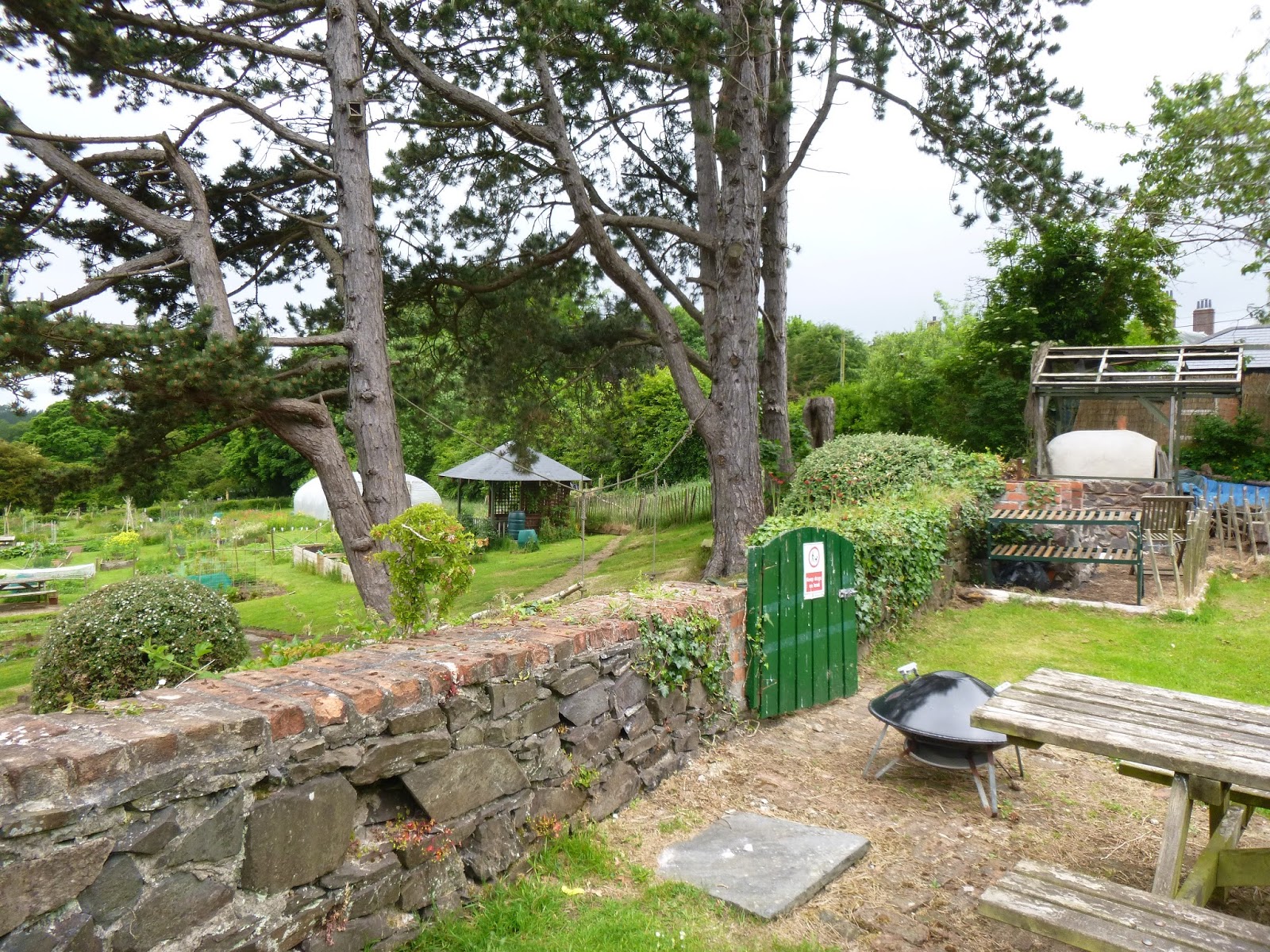
Community garden, a great space

All in all it was a really interesting week that I would recommend to all Rangers.  It makes a refreshing change for both sides of the link and allows for plenty of learning, even if to start with you don't know how to articulate what that learning is!  For me though its back to the grind stone and back to home sweet home.

Home...literally- i can see my house!
By Upland Ranger Sarah
Follow us @ntlakesfells